12 fevereiro 2026
EFI and Proforest partner to accelerate forest restoration and sustainable cocoa in Ghana
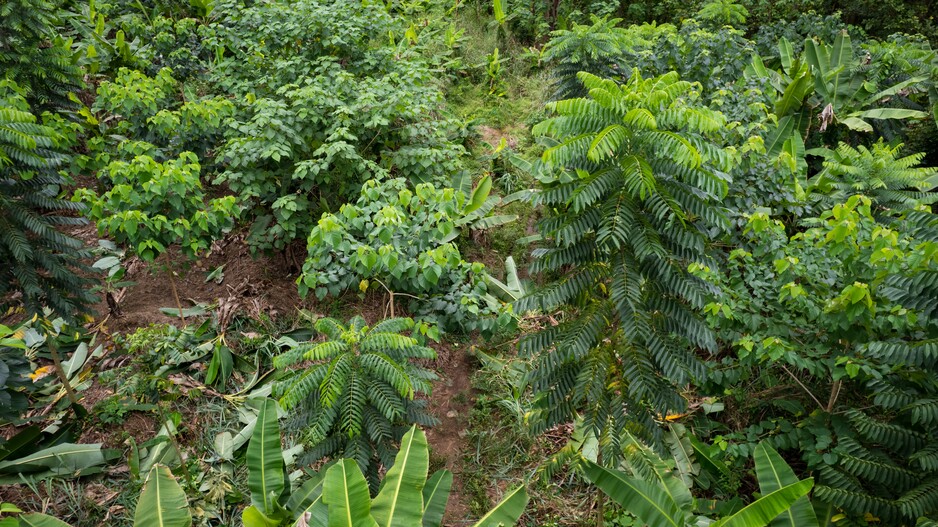
Accelerating climate smart agriculture and forest restoration in the Asunafo–Asutifi landscape
The Asunafo–Asutifi landscape programme has received a major boost as the European Forest Institute (EFI) partners with Proforest to accelerate forest restoration and climate‑resilient agriculture in Ghana’s Ahafo Region. This collaboration marks a significant step forward in implementing the Asunafo–Asutifi Landscape Management Plan, especially in restoring degraded forest reserves and expanding tree cover on farms through dynamic agroforestry systems.
Backed by years of landscape governance work and growing donor and private‑sector support, the landscape programme is entering another phase designed to scale proven restoration interventions while strengthening the livelihoods of smallholder cocoa farmers.
A landscape critical to Ghana’s sustainable cocoa and forest protection goals
Covering an estimated 328,000 hectares, the Asunafo–Asutifi area is a designated Hotspot Intervention Area (HIA) under Ghana’s Cocoa Forest REDD+ Programme. Since 2018, Proforest has collaborated with the Forestry Commission, COCOBOD, the World Cocoa Foundation, and community institutions such as Community Resource Management Areas (CREMAs) to promote deforestation-free and climate‑resilient cocoa landscape. Through capacity building, governance strengthening, and locally led planning, the foundations of an integrated landscape management system have been firmly established.
Key achievements that set the stage for scaling up
Proforest’ earlier interventions supported by Walmart Foundation have delivered substantial environmental and socio‑economic results, including:
- 266 hectares of degraded forest restored under the Modified Taungya System (MTS)
- Over 500,000 multipurpose tree seedlings planted in on‑reserve and off‑reserve areas
- Establishment of Rural Service Centres to provide technical support to farmers
- Creation of revolving funds to promote financial inclusion and sustain livelihood interventions
What the new EFI‑funded phase will focus on
1. Climate‑smart farming: Expanding training and adoption of climate‑resilient agriculture and dynamic agroforestry, helping farmers improve productivity while enhancing tree cover.
2. Forest rehabilitation: Increasing efforts to restore grossly degraded forest reserves, protecting biodiversity and strengthening ecosystem services essential for climate resilience.
3. Strengthened governance: Enhancing multi‑stakeholder landscape governance structures to support collective decision‑making on Environmental, Social and Governance (ESG) priorities.
4. Livelihood diversification: Improving financial access through low‑interest credit schemes and promoting alternative income opportunities that reduce dependence on cocoa alone.
Why this support matters
The Asunafo–Asutifi landscape plays a vital role in Ghana’s national climate goals and international sustainability commitments, including compliance with the EU Deforestation Regulation (EUDR). By aligning forest restoration, climate‑smart agriculture, and community livelihood support, the programme aims to:
- Reduce deforestation risks
- Increase carbon sequestration
- Strengthen smallholder resilience
- Protect biodiversity
- Secure sustainable cocoa production
This renewed investment positions the landscape as a leading model for integrated land management in Ghana, demonstrating how collaborative action can restore forests, improve farmer livelihoods, and build climate‑resilient production systems.