26 Agustus 2026
Diversifying to build resilience: how livelihood workshops are strengthening palm-growing communities in southeastern Mexico
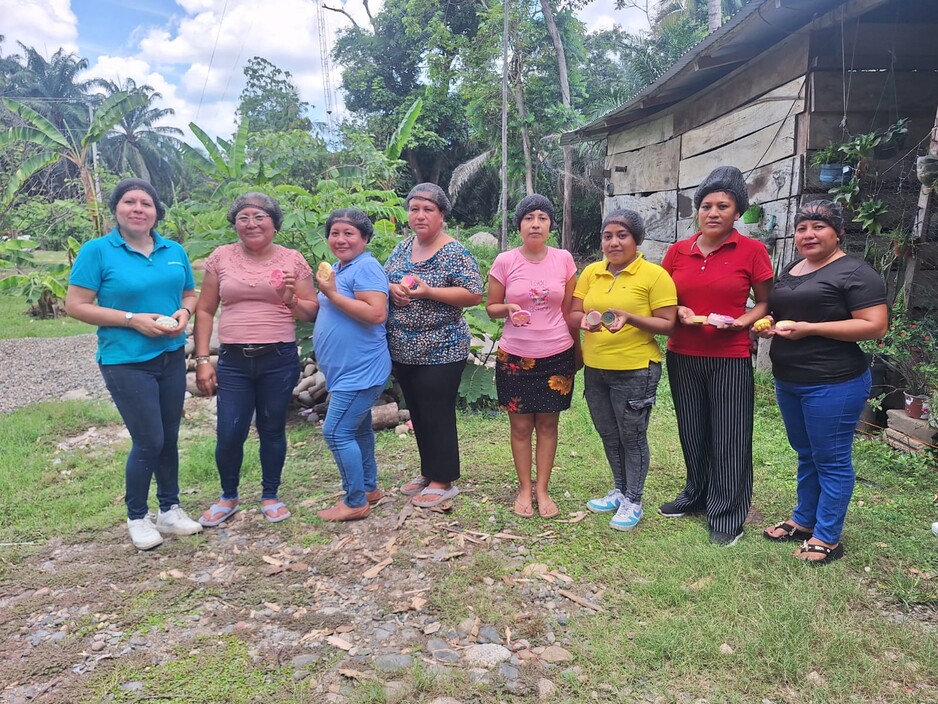
When a producing family depends on a single source of income, any market fluctuation or climate event can compromise their economic stability. This is the premise behind the livelihood workshops that, under the Agrovita programme, are being carried out in palm-growing communities in Tabasco and Chiapas, promoting complementary productive activities based on the resources available in each region.
Agrovita is a programme driven by PepsiCo Mexico and Proforest, focused on regenerative agriculture and community development in southeastern Mexico. For five years, the team has worked to strengthen the livelihoods of smallholder producers and rural communities, with a particular focus on women's economic inclusion. The programme currently works with 722 smallholder producers, around 28% of whom are women.
Diversifying income, not just the crop
The central message behind these workshops is that a community's economic resilience does not depend solely on improving its main crop, but on broadening the income sources of the families who depend on it. Diversifying livelihoods reduces vulnerability to market fluctuations, strengthens food security and opens up local entrepreneurship opportunities that previously did not exist.
To achieve this, the workshops were designed around a key principle: making use of resources already available in each region, so that the resulting activities would be viable and sustainable over time, rather than dependent on external inputs. Four lines of work emerged from this approach: producing artisanal soap from locally available palm oil, making jam using surplus seasonal fruit, growing oyster mushrooms using agricultural residues and oil palm inflorescences as substrate, and establishing family gardens in areas with access to water.

Women's inclusion: a change that carries its own weight
One of the most significant outcomes of this initiative is the active participation of women in spaces that, due to regional customs, traditionally did not include female palm growers in events and training sessions aimed at the sector. With around 28% of programme beneficiaries being women, the workshops have evolved from being simply a space for technical training into a mechanism for strengthening autonomy and community participation.
This outcome is not incidental: the workshops explicitly promote women's participation as part of their design, recognising that livelihood diversification and gender equity are directly connected when it comes to strengthening family and community economies.
A model that also benefits supply chain businesses
For palm grower organisations and companies committed to the sustainable development of their oil palm supply chains, investing in the wellbeing of producing communities is not merely a social action: it strengthens relationships with producers, contributes to local development and generates a positive impact that supports the long-term sustainability of the business.
The results achieved so far in Tabasco and Chiapas are possible thanks to the joint work between communities, the technical team and the client company, confirming that sustainable development is built through partnerships and ongoing support, rather than through isolated, one-off interventions.
Beyond technical knowledge
One of the most relevant learnings from follow-up visits to these workshops is that their impact goes beyond the transfer of technical skills. The enthusiasm and commitment shown by participants, the way they strengthen their skills and share experiences with one another, and the way they begin to envision new income opportunities, all show that these spaces also strengthen trust and collective work within communities.
Five years into the programme's work in the region, Agrovita reaffirms that livelihood diversification — when built around local resources and with a focus on inclusion — is an effective way to strengthen both the economic resilience of producing families and the sustainability of the supply chains they form part of.