5 Agustus 2026
From producer to producer: how ECAs are transforming soil management in sugarcane farming
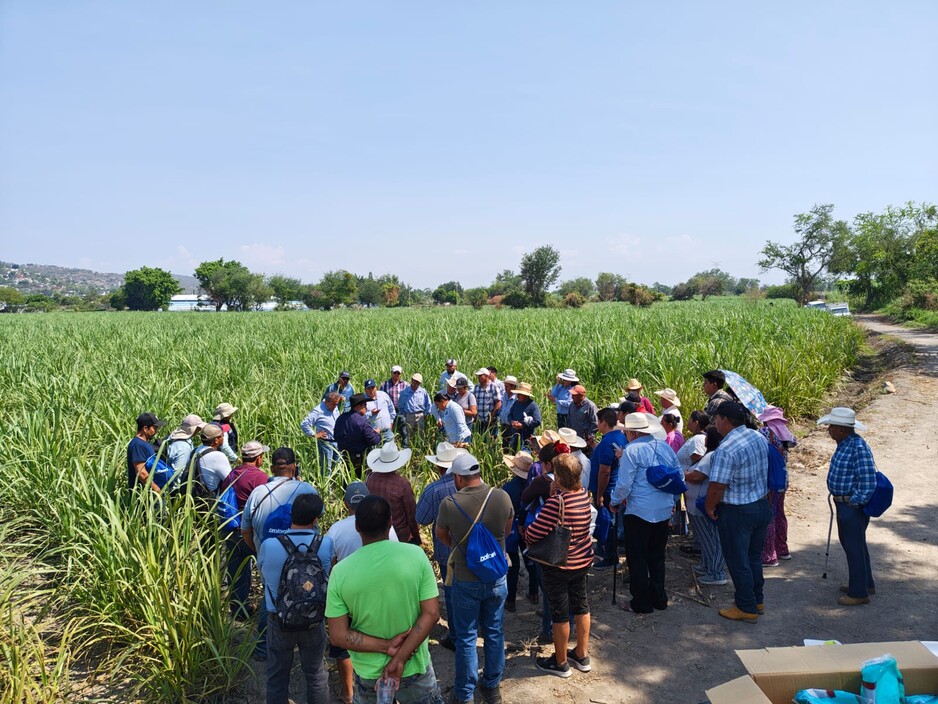
Trust, more than technical instruction, is the factor that accelerates the adoption of sustainable practices in the field. This is one of the key lessons emerging from Farmer Field Schools (ECAs), a participatory learning methodology that Proforest promotes in sugarcane sourcing areas, and which is strengthening local capacities, advancing regenerative agriculture and building more resilient farming communities.
Peer-to-peer learning accelerates change
The central message emerging from the ECA experience is clear: when a producer shares real results achieved on their own plot, the effect on other producers differs from that of any conventional technical training. Direct evidence reduces the fear of change and builds the trust needed for new practices to be adopted more quickly.
ECAs are spaces where sugarcane producers learn, share and experiment together, building a bridge between technical knowledge and the everyday reality of the field. Through field visits, demonstrations, joint experimentation and group discussions, participants exchange results, challenges and lessons learned, allowing innovations to be evaluated and adapted to local conditions before wider adoption.
Soil coverage: the practice with the greatest impact
Among the various regenerative practices shared through ECAs, maintaining soil coverage with harvest residues is identified as one of the highest-impact approaches. This practice serves several functions simultaneously: it conserves moisture, reduces erosion, protects soil biological activity, increases organic matter content and lowers greenhouse gas emissions by avoiding the burning of residues.
Its relevance also lies in its accessibility: by making use of resources already available on the plot itself, it is a practice most producers can implement without significant additional investment, generating both productive and environmental benefits.
This practice is complemented by others focused on soil regeneration, such as the use of biofertilisers, compost and biorational products, which, in addition to being environmentally friendly, represent a viable alternative for reducing production costs compared with conventional inputs.
Results that support the shift in practices
The adoption of these practices is already generating measurable results. One producer who implemented regenerative agriculture on her plot achieved an increase of 35 tonnes of cane per hectare, compared with the previous cycle under conventional management.
Other producers who began leaving cane straw on the soil and incorporating compost have reported, after several production cycles, better moisture retention during dry periods, greater biological activity and greater ease in working the soil. This type of evidence, arising from producers' own direct observation, is particularly valuable, as it is ultimately what drives others to adopt similar practices.
An impact that goes beyond the crop
The outcome of this work extends beyond agricultural productivity: it directly affects soil, water, biodiversity and the future generations who will depend on these production systems. By strengthening local capacities and facilitating knowledge exchange among producers, ECAs contribute to building farming communities that are more resilient to the environmental and climate challenges facing the sugarcane sector in the sourcing areas where Proforest operates.
Kategori: Pengadaan yang bertanggung jawabProduksi yang bertanggung jawabAmerika LatinGula