22 May 2026
EUDR Simplification and beyond
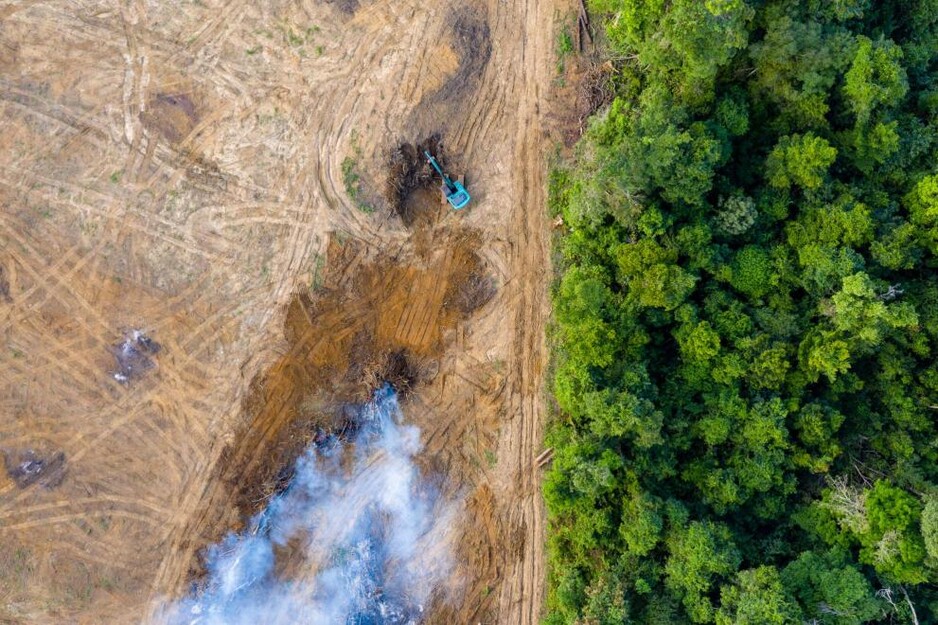
The European Commission’s simplification review of the EU Deforestation Regulation (EUDR) brings much needed clarity, first and foremost by not requesting any further delays. Looking under the hood, the various updates create more certainty and added flexibility, but also raise important questions about what impactful implementation should look like.
Three points stand out from the new Guidance and FAQ documents:
- Reduced downstream obligations: Cutting duplication should ease compliance along value chains. However, it risks further shifting accountability upstream and weakening traceability later in the chain. While there is little sense in downstream operators re-checking the same data over and over again, they do hold responsibility and there are many ways for them to contribute to tackling deforestation. Better guidance on what they can do proactively is now needed.
- Risk-based legality assessments: Improves proportionality and efficiency by focusing effort on high-risk areas and producers, yet can create uncertainty about consistency, comparability, and potential uneven enforcement across operators. Building collective, open resources on sector and country-specific data needs now becomes key.
- Carve-outs for small and micro enterprises: Lowers burden and avoids disproportionate impacts on smaller actors, but the restrictive scope of this new category – limited to actors from low-risk countries – seems mainly to protect small EU businesses rather than the millions of small producers in production countries. Inclusive compliance, in line with the concept of a just transition that is increasingly relevant in the climate space, thus remains a challenge.
From short term procedures to long-term strategies
The latest guidance will help to mature the first generation of EUDR compliance processes. This means it’s also a good moment for companies to move from short term compliance planning to longer term strategies on making their current and future supply chains deforestation free.
Deforestation and conversion is driven by a complex mix of land tenure pressures, economic incentives, and agricultural expansion that no single regulation can fully resolve. Meaningful progress towards securing DCF (Deforestation and Conversion-Free) commodities in the future will require coordinated action, in-country expertise, and long-term supply chain engagement. Downstream operators who now face limited EUDR obligations should re-focus on strategies that will enable scaling of DCF and EUDR compliant supply chains.
A big part of this means finding progressive ways to integrate smaller, higher risk producers into supply chain strategies, given that a material portion of global deforestation risk will remain unaddressed if these are simply excluded from the supply chain equation. In short, it requires strategies that consist of an impact-compliance mix, with adequate resourcing on both ends.
Beyond EUDR
Deeper supply chain collaboration is needed, both to make EUDR compliance more cost effective over time, but also to address challenges that fall outside the remit of EUDR compliance but that are nonetheless essential to protecting nature and forests. One of the most obvious is how displaced deforestation pressure can threaten non-forest biomes, with the Cerrado in Brazil as the clearest case in point.
Whether place, commodity or issue-focused, the need for peer spaces that drive collaboration and investment is bigger than ever. The Consumer Goods Forum's Forest Positive Coalition of Action and the Palm Oil Collaboration Group are good examples of action-oriented convening that allow companies to build solutions that transcend individual due diligence procedures. These include:
- Scaling the responsible use of open data resources: pooled geolocation mapping and farm registries or low risk area designation, for example.
- Pre-competitive supplier databases: shared lists linking mills to smallholder sources for consistent risk screening.
- Landscape/jurisdictional initiatives and joint smallholder support: companies co-invest in deforestation-free regions rather than farm-by-farm checks. Enables collective funding for training, yields, and legality documentation.
- Shared grievance & remediation systems: collective mechanisms to handle escalating risks and non-compliance without exclusion.
At Proforest, we work with global organisations across sectors to navigate exactly these challenges. We help them progress from meeting regulatory requirements to building the deeper supplier relationships and landscape-level engagement that create lasting impact. If you’d like to discuss how to incorporate risk-based approaches into your longer-term supply chain strategies, please get in touch or visit proforest.net to see some examples of our work.
Further information:
Proforest's work in Supply Chain Regulation
Understanding the EUDR: What It Is and Why It Matters
Study: Challenges and opportunities for Brazilian exporters to comply with the EUDR
Categories: NatureResponsible sourcingResponsible productionPolicy and regulationEurope