12 November 2026
Growing from what farmers know with local knowledge in the Asunafo Asutifi landscape
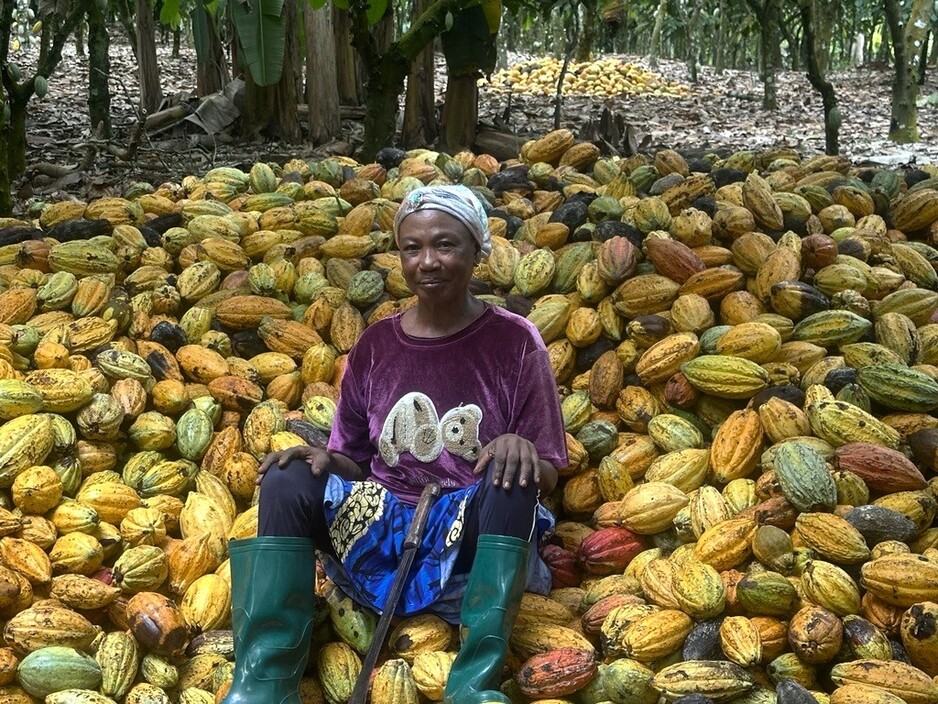
Cocoa husks, plantain stems, neem leaves and used water bottles: some of the ideas documented during European Forest Institute and Proforest field visit to the Asunafo Asutifi landscape. The visit was a chance to review progress on the ‘Partnership for Restoration of Degraded Asunafo Landscape’ project and hear how farmers use local knowledge to care for their farms.
Knowledge rooted in the landscape
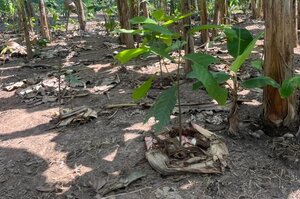
Walking through the demonstration farms, the visiting team saw that almost every practice began with something farmers already had. Cocoa husks, wood ash, cocoa placenta and poultry droppings are used to feed the soil. Plantain and coconut husks, cocoa placenta and sorghum waste become mulch that holds in moisture and keeps weeds down. Banana stems and used water bottles are turned into simple drip irrigation. Ash is spread beneath cocoa trees, and preparations of neem and bitter leaves help keep insects away from the pods. These were practical examples of farmers drawing on what is available in their own environment.
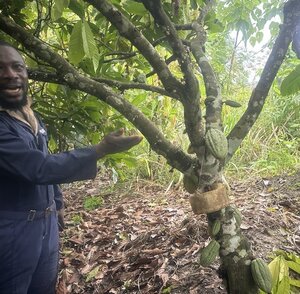
Yakubu Dramani: caring for the farm and the forest
In Bediako, Yakubu Dramani is both a farmer and a leader. A Chief Farmer and traditional leader of the Moshie community, he manages two cocoa farms covering 20.5 acres. He was named Best Male Cocoa Farmer in the Ahafo Region in 2012, and at the 2026 National Farmers Awards he received the Best Male Plantain award.
Yakubu showed how he uses neem and bitter leaves to protect his cocoa pods from insects. His care for the landscape extends beyond his farms. He is a member of the Bediako Fire Volunteer group, set up as part of this project with support from the European Union,, and he has formed a youth group to protect the restoration site and discourage illegal chainsaw operators from entering the forest.
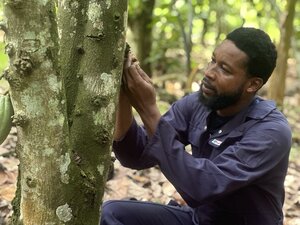
Osman Haruna: the farm that paid for school
For Osman Haruna, a young lead farmer from Atom, farming and education have grown side by side. He remembers being mocked as a boy for helping his father on the farm. He kept going with both farming and school, and the income from the farm helped him complete senior high school. Today he is studying for a tertiary qualification through weekend classes.
Osman manages three cocoa farms covering 7.08 acres, along with a small poultry farm. He is secretary of the Community Child Protection Committee, a coach with the Women’s School of Leadership and a VSLA couples’ trainer in financial management. He also takes part in tree restoration at the Modified Taungya System (MTS) site that forms part of this project. His story shows a new generation of farmers carrying local knowledge forward and adding to it.
Mary Nsiah: learning from her own trees
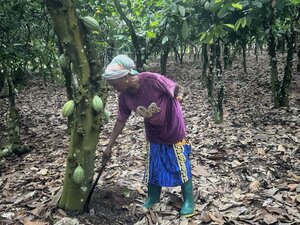
Mary manages three cocoa farms covering 13.9 acres and completed Farmer Business School in 2022. The Asunafo Cocoa Farmers Union named her Best Female Cocoa Farmer in 2021, and she was recognised as the Ahafo Regional Female Enterprising Cocoa Farmer in both 2023 and 2024.
I have resorted to organic farming for some time now. I realised the spaces where I had trees were doing better than the open ones, so I am replanting trees provided by Proforest and the cooperative in the bare spaces to catch up with the cocoa trees.
Building on what is already there
Across the farms, local materials were central to the practices shared. Each farmer had an approach shaped by the materials and experience available to them. The value of the visit was not only in documenting these practices, but in hearing the thinking behind them. Mary’s observations about shade, Yakubu’s use of local leaves and Osman’s path through farming and school put farmers at the centre of the story as knowledge holders, not simply as recipients of support.
The lesson for regenerative agriculture and organic farming is clear: lasting change starts with what farmers already know. Listening to farmers, understanding what they are already trying, and building on it together makes support more relevant, more affordable and more likely to last. It can begin with the materials farmers have, the conditions they work in and the practices they trust.