The High-Integrity Insetting Accelerator
Scaling up landscape investment
through supply chain decarbonisation
In July 2026, Proforest, Conservation International and the International Platform for Insetting launched the High-integrity Insetting Accelerator. The Accelerator is an initiative to operationalise the widely endorsed principles for high-integrity insetting within key global standards and in projects on the ground.

- The challenge: collaborative investment is key to achieve climate mitigation and adaptation outcomes in agricultural landscapes, yet current frameworks limit carbon claims and associated supply chain finance.
- The opportunity: key corporate climate standards can recognise the climate benefits resulting from landscape action to unlock investment.
- What is needed: testing of emerging high-integrity approaches in production landscapes and bringing this expertise to standard setters, which will be the focus of our work throughout 2026 and 2027.
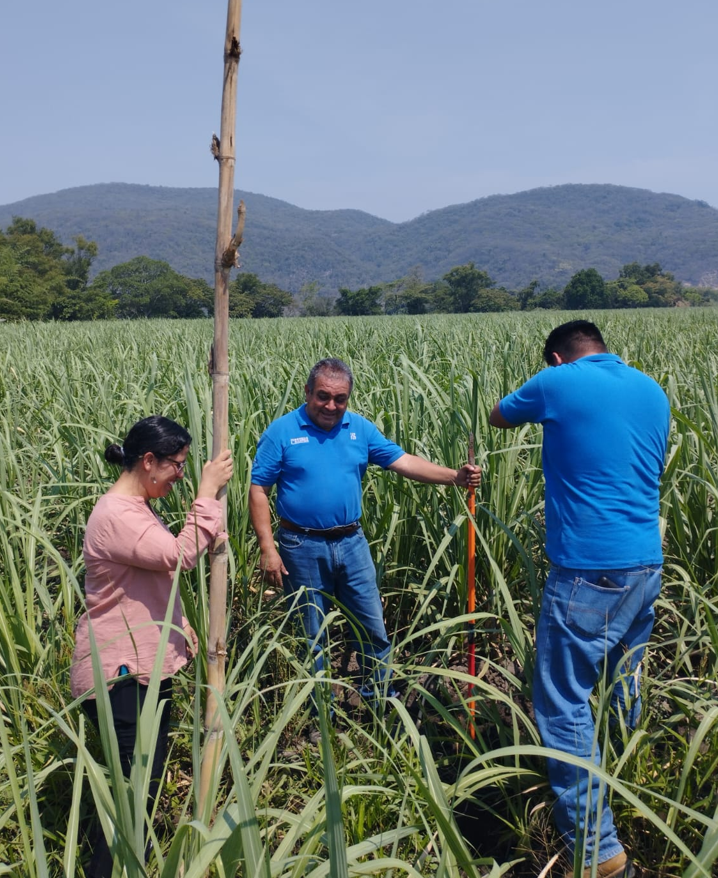
Regenerative Agriculture project with sugarcane suppliers.
What is insetting?
Insetting includes interventions connected bio-physically, ecologically and/or socio-economically to a company’s value chain which generate greenhouse gas emissions reductions and carbon storage.
As opposed to offsetting, insetting refers to actions within a company’s supply chain that result in greenhouse gas (GHG) emission reductions and carbon sequestration.
Examples include:
- Implementing a reforestation project on a farm a company buys from
- Engaging a supplier to implement regenerative agriculture practices across producers
- Working with the supply base to combat deforestation
- Prioritising suppliers that are already implementing programs to reduce their emissions
Whether an individual insetting project counts towards a company’s GHG targets depends on a set of criteria established by global GHG accounting standards; the project’s location relative to the company’s value chain is a key criterion.
Why high-integrity?
High-integrity insetting creates positive impacts for, and improves resilience of producers, companies, communities, landscapes and ecosystems. In 2025, 28 organisations collectively endorsed a set of 6 principles for high-integrity insetting, covering three key themes: supporting sectoral transformation, promoting a nature positive and just transition, and ensuring efficient use of resources.
Principles for high-integrity insetting
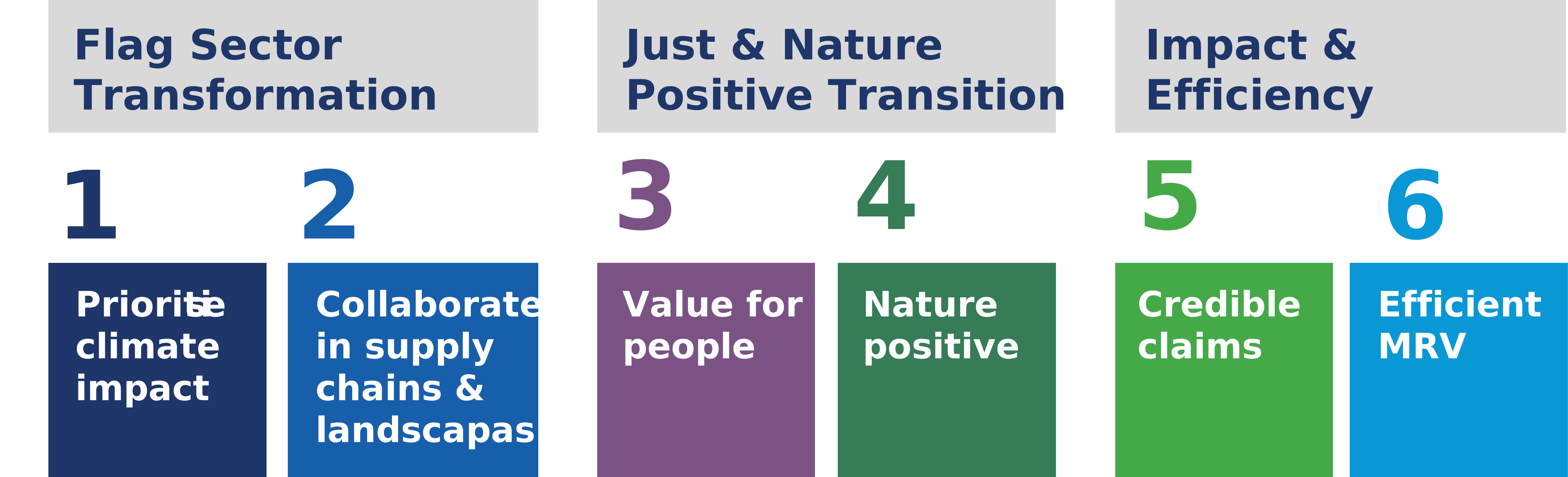
To support the scaling, replication, and continuous improvement of high-integrity insetting action we need to embed these principles in both specific projects in key landscapes, and in the key global standards that drive corporate climate action and investment.
Mitigation outcomes in landscapes
Landscape-level climate action often falls outside the bounds of current GHG accounting frameworks and does not count towards company’s climate targets. Yet, collaboration at the landscape level is essential to reducing overall Forest Land and Agriculture (FLAG) emissions and strengthening the resilience of the people and nature that underpin production systems, all key to the Principles.
While many landscape initiatives have proven successful in promoting responsible agricultural production, investment remains far below what is needed. A key lever to build the business case for landscape initiatives could be the recognition of the carbon benefits they generate towards FLAG targets.
Unlocking this private climate finance for landscapes through supply chains requires resolving a set of methodological challenges. Some examples of activities that generate positive climate mitigation and other outcomes, but are currently difficult to account for:
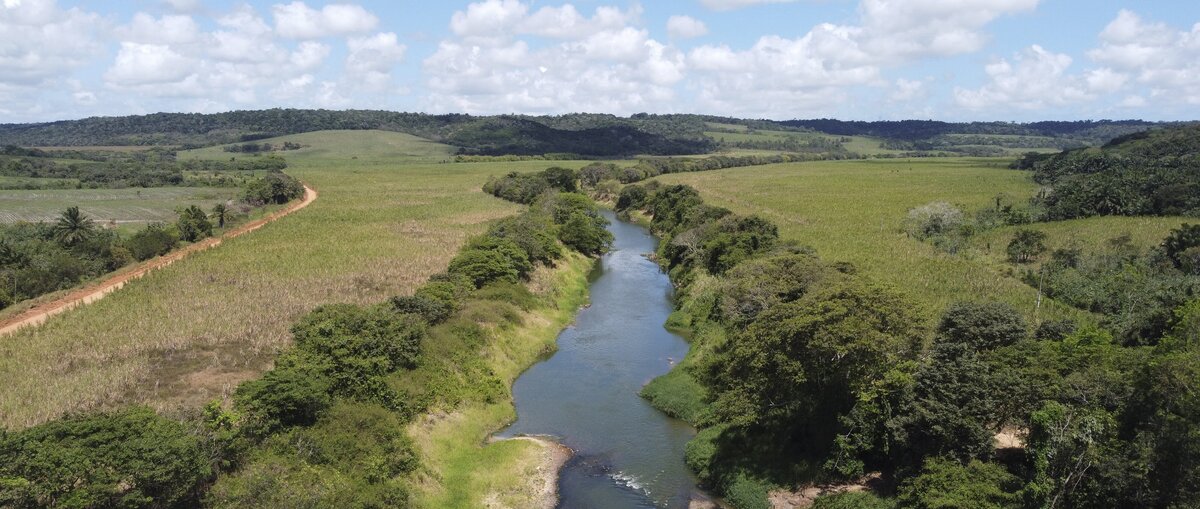
- On-farm GHG reductions: Companies may support lower fertiliser use within their sugarcane supply shed, but without full traceability cannot claim the full resulting emissions reductions.
- Adjacent land carbon removals: Companies may restore areas such as riparian buffers in soy farms, they can’t claim the impacts of these carbon removals towards their supply chain climate targets due to unclear GHG accounting rules.
- Off-farm GHG reductions: Companies may invest in wider landscape restoration, such as peatland rewetting in palm oil landscapes, but they can’t claim the impacts of these projects towards their supply chain climate targets because they take place outside the palm farms.
Standards such as the Science Based Targets initiative (SBTi) and the GHG Protocol have been essential in advancing and quantifying corporate climate action globally. Emerging approaches, including multi-statement reporting and Ongoing Emissions Responsibility, create new opportunities to account for climate action beyond the traditional value chain, capturing activities that are closely connected to, but not directly within, a company’s value chain.
Our role
Supporting climate standards
To unlock more positive impact at scale in production landscapes through insetting, we are working with climate standards on three topics:
- Include “near-value chain” mitigation towards FLAG targets (e.g. emission reductions through peat restoration off-farm)
- Prioritise the benefits to people and nature of insetting projects (e.g. the need for safeguards and benefit sharing)
- Regionalise methodologies to reflect local realities in global standards (e.g. country/region-specific commodity GHG target pathways)
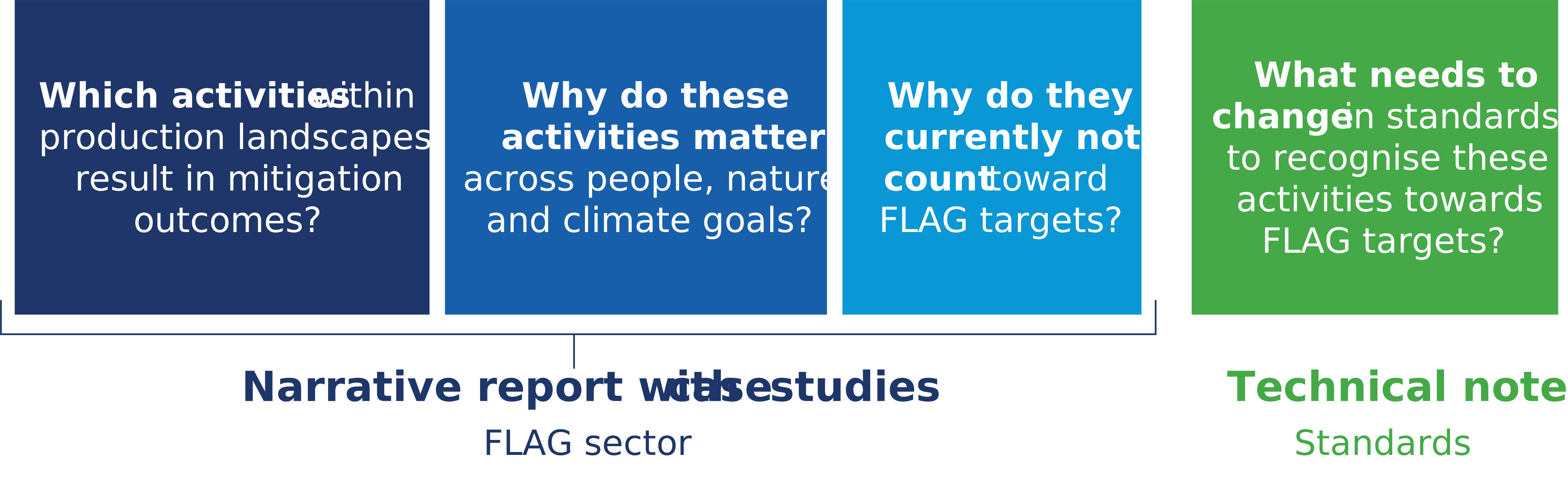
The first sprint of the Accelerator (2026) is focused on creating incentives for “near-value chain” mitigation (#1 above) collaboration with a group of leading companies. This sprint will be led by a set of case studies aimed at clarifying the theory: which pathways exist or could be created to recognise high-integrity mitigation actions in key climate frameworks.
We work in close collaboration with amplification partners to validate challenges and solutions and to drive sectoral alignment on credible paths forward. Amplification partners include collaborative initiatives, standards, project implementers, consultants, NGOs, and others.
In the second sprint of the Accelerator, starting in 2027, we aim to test these theoretical approaches in practice with suppliers and in landscapes. In the long run, we aim to scale up insetting throughout key agricultural regions globally, ensuring that insetting projects are leveraged for to support the resilience of people & nature across global production systems. While the focus of our second sprint will be decided in collaboration with funders, one valuable focus area may be to define what high-integrity means at the project level and develop a framework for assessing and categorising projects against these criteria.
Promoting insetting in producing countries
For insetting to work, collaboration with suppliers and producers is key. We can only reach science-based targets if there is global collaboration. There has been relatively low uptake of global corporate climate standards in tropical countries, which brings about a disconnect between downstream targets and upstream implementation. Beyond carbon credits and other carbon instruments, insetting is a framework to promote the private sector’s contribution towards Nationally Determined Contributions (NDCs). By aligning global targets with local action, a pathway is created to capture private climate finance for production landscapes through global supply chains.
Two key gaps remain: capacity and awareness of the opportunity insetting offers; and the recognition of regional differences in global frameworks (“regionalisation”). Proforest is championing work to address these challenges in Brazil: in this Call for Engagement, supported by more than 20 key stakeholders, key opportunities and challenges of insetting in Brazil were laid out; and this case study in collaboration with PUR explains how an insetting project can work from beginning to end. With new funding, we are exploring the expansion to other regions where we have a local presence.
Interested in the High-Integrity Insetting Accelerator?
This collaborative effort aims to leverage corporate climate targets for positive impacts on the ground, through climate standards engagement, key stakeholder alignment, and implementation in production landscapes.
Find out more or join the Accelerator as a sponsoring company or amplification partner: