16 June 2026
China That Understands Brazil – and the Brazil That Needs to Understand China

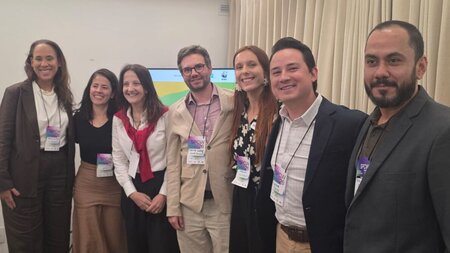
There is something revealing about sitting at the same table as someone who understands both sides of the equation. That is exactly what the week of 8–12 June represented for Proforest in Brazil: the visit of Jian Wan, Deputy Director of Proforest China, for a series of strategic discussions with leaders from organisations that shape Brazil’s supply chains.
Jian Wan travelled through Brasília and São Paulo, meeting with key stakeholders from agribusiness, civil society, research institutions and the public sector — organisations that work daily to maintain and expand access to the world’s largest consumer market while meeting sustainability requirements.
Proforest’s work with China is not new, but it has gained a new dimension with the 15th Five-Year Plan (2026–2030), approved by the national lawmakers in March this year. The plan explicitly identifies the development of high-standard and green trade as a strategic priority, alongside the strengthening of economic relations with the Global South, including Brazil. This is not merely a trend; it is state policy.
It is within this context that the work of Proforest China becomes directly relevant to Brazilian organisations. In may, Jian Wan represented Proforest as co-organiser of a seminar in Beijing on green supply chains during the launch of the 15th Five-Year Plan, held in partnership with the China Council for the Promotion of International Trade. Proforest co-facilitated the event, which brought together representatives from government, industry, NGOs and international organisations. Participating in forums such as this — not as observers, but as facilitators of the process — means something tangible for the organisations we work with: access to the discussions that are shaping the rules of the game in China. We do not interpret this market from the outside. We are part of it.
What Jian Wan Brought
Beyond the face-to-face meetings and the invaluable benefit of direct exchanges, Jian brought to Brazil an informed perspective on how China is organising itself internally for the next development cycle. The presentations shared with partners and clients covered developments in Chinese policy on sustainable supply chains, the growing role of standards and certification in market access, and the channels through which Chinese demand for products with legality and sustainability is being structured.
For those working with soya, beef, or any other commodity of significance in Brazil’s exports to China, this information is far from abstract. It is the map of the landscape that will determine where Brazil needs to position itself over the next five years.
Where Proforest Positions Itself
Proforest has had an established presence in Brazil for more than a decade. We work with companies, government bodies, cooperatives and civil society organisations across supply chains that include soya and cattle production. Our local team understands the Brazilian Forest Code, the dynamics of production landscapes, the challenges of traceability at the end of the supply chain, and the expectations of the different stakeholders within the system.
Through Proforest China, this knowledge gains a new dimension: the ability to connect what Brazil produces with what China actually demands, taking into account all the technical, institutional and political complexity that such a connection requires.
More than providing ready-made answers, the challenge is to understand how the transformations taking place in China connect with Brazil’s realities and opportunities. Jian Wan’s visit made an important contribution to that understanding.